 KIDS RIDE-ON TOYS WHOLESALE
supplier / BUYER DESK
Five-Category Ride-On Range: Buyer's SKU Worksheet
A hypothetical distributor builds a five-category ride-on range. See the SKU worksheet, evidence boundaries, and the RFQ decisions that keep a container honest.
Published 2026-09-27
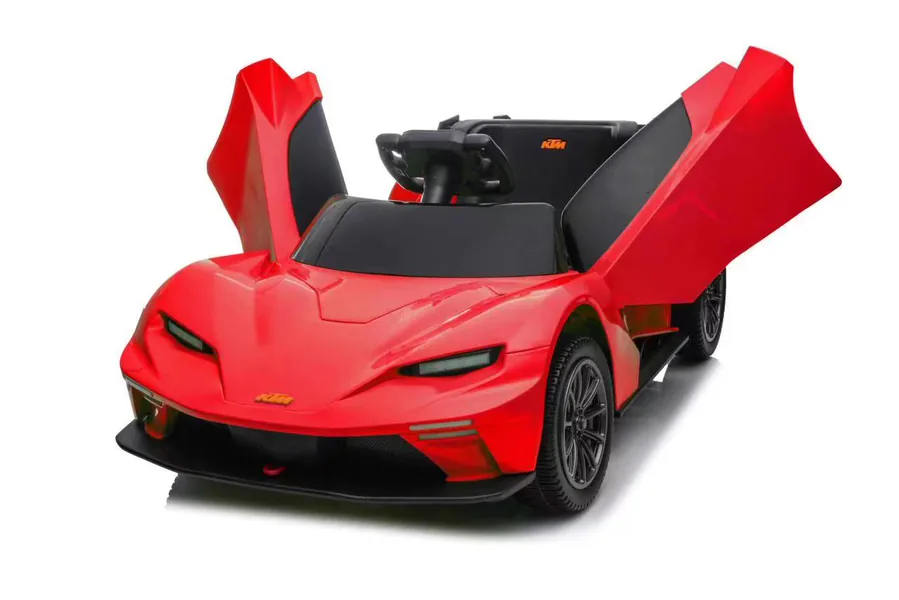
Here is the verdict up front: a distributor building a five-category ride-on range should freeze five columns before sending a single RFQ — category, age band, channel, evidence type, and sample revision. Treat everything a supplier sends you as quoted input until a sample, a packaging revision and a lot-matched document confirm it. That single discipline separates a range that reorders from a container that sits.
The scenario below is hypothetical, but the mechanics are not. It maps a SKU-level worksheet onto a real catalog starting point — the quoted Off-Road Jeep variant recorded as SKU ROT-353539, a 12V off-road SUV-style ride-on with a Southeast Asia quote variant — and it shows exactly where the evidence stops. Electric ride on cars wholesale is the commercial core of that range, and it is also where documentation slips cost the most money.
What This Hypothetical Case Actually Decides
- A five-category range should be organized as push/foot-powered, manual steering no-pedal, pedal tricycles, pedal cars, and battery/electric cars — then every SKU gets an age band, a channel, and a document set attached to it.
- The quoted supplier input on ROT-353539 (music, Bluetooth, lights, low-battery alarm, 2.4G remote, 3-speed, dual drive, soft start/stop, four-wheel suspension, two-point harness) is quoted input, not a verified capability. Sample and packaging revision must confirm it before you print a spec sheet.
- Carton CBM must be recalculated whenever carton size or pack quantity changes, so the worksheet should hold the measured outer-carton dimensions, not a remembered number.
- Separate the three evidence types in writing: quoted supplier statements, observed media (photos/video you or your agent shot), and your own buyer recommendations. Mixing them is how a sample photo becomes a 'certified' claim.
- Tooling terms belong in a document, not a handshake — fee, ownership, storage period, and what happens to an idle tool. A fee paid without those four clauses frozen is an open question, not a purchase.
Five-Category Worksheet: What to Record and Where the Evidence Boundary Sits
| Category 1 — Push / foot-powered | Age band and weight limit per SKU; evidence type: quoted spec vs observed sample. Not supplied for this case → varies by spec. |
|---|---|
| Category 2 — Manual steering, no pedals | Steering geometry and handlebar reach recorded per SKU; evidence type: sample photo + supplier statement, kept separate. |
| Category 3 — Pedal tricycles | Frame, wheel retention and axle behavior recorded as inspection points; the relevant abuse sequence should check wheel retention, axle deformation, rotation and accessible end exposure. |
| Category 4 — Pedal cars | Seat, harness and non-slip surface per SKU; no certification claim without a lot-matched document → varies by spec. |
| Category 5 — Battery / electric cars | Catalog starting point: SKU ROT-353539, Off-Road Jeep family, quoted 12V configuration reference DLS-X10a.b.c (12V4.5AH×1, 380×2, Southeast Asia, three style variants), core size 100×63×60, carton quantity 1. Everything above this line is quoted input. |
| Column: market / channel | Southeast Asia quote variant is recorded for ROT-353539. Other destination markets for this range are unknown and must be confirmed per SKU. |
| Column: documents | Map market → lot → which file covers which test. A certificate that does not match the lot is not paperwork. |
| Column: sample revision | Link the drawing or 3D-model revision to the tooling, FAI, test sample and production order so an old file cannot silently return to use. |
| Column: CBM | Derived from measured outer-carton dimensions; recalculate when carton size or pack quantity changes. |
Why the Electric Category Carries the Deepest Commitment — and the Most Paperwork
Electric ride-ons are the category where a distributor's money, compliance exposure and reorder behavior all concentrate. That is also why the first RFQ in this hypothetical range should be the electric one, not the cheapest one.
Take the recorded catalog start: an off-road SUV-style ride-on, 12V, quoted with music, Bluetooth, lights, low-battery alarm, a 2.4G remote, three speed settings, high/low dual drive, soft start and stop, four-wheel suspension and a two-point harness. Every one of those features is a line item someone will eventually have to prove. Bluetooth and 2.4G remote functions sit in radio-equipment territory, and the RED framework strengthened traceability obligations for manufacturers, importers and distributors of radio equipment. That is not a marketing footnote; it is a reason the worksheet needs a document column before the PO, not after.
For Great Britain, manufacturers and importers placing toys on the market must provide their name or registered trade name and postal address in the required manner. Small print on the carton is a compliance field, not a design choice. If your private label is going on the box, that address field is your problem to solve at artwork approval, not at customs.
Sound is the other quiet trap. The new EU Regulation addresses both continuous and impulse noise emitted by toys designed to make sound. A music feature on a ride-on is not the same test question as a horn on a push toy, and the worksheet should carry the question rather than assume the answer.
The Filler Lesson: Small Footprint, Fast Reorder, Real Story
One documented case from mixed-container importing is worth transferring here, with its limits stated. A mixed-container importer bringing 20GP and 40HQ loads needed high-turnover filler to complete CBM alongside an outdoor goods line. Generic unbranded filler complicated the storytelling to his retail accounts. The category he used as filler ended up reordered in advance because it sold out faster than pricier lines — he calls it 'gold in a container' — a category that fits small space and moves fast.
The transferable part for a five-category ride-on range is narrow but real: a fifth, smaller-footprint category can carry the container economics even when it is not the headline. The limit is equally real. This is a single first-person operational anecdote, not a named factory, not a dated record, and not order data. Do not build a forecast on it. Build a reorder-tracking habit on it.
The worksheet therefore gets a reorder column from day one: units sold per SKU per month, reorder lead time, and whether the SKU earned its CBM. Categories that look like filler on the purchase order are sometimes the ones your accounts ask for by name six weeks later.
How to Verify a Chinese Ride-On Supplier Before the Range Gets Expensive
A factory's stated capacity is a planning input, not a verified fact, until the product type, machine mix, shifts, tooling and recent records are checked. Ask for the records that match your product, not the brochure that matches everyone's.
Start with the sample, and treat the sample as a hypothesis. Request the exact SKU, the market variant, and the packaging revision you intend to order. If the quote says Southeast Asia variant, do not accept a sample built to a different market's configuration. Photograph what arrived, label the photos as observed media, and keep them apart from the supplier's written claims.
Walk the inspection logic next. Failed lots should be isolated on the floor, the defect class recorded, and release should happen only after rework. Buyers who want an AQL number should get it from the agreed inspection plan on the PO, not from a catalogue sentence. If a supplier volunteers a number in a chat message, that is a sales answer, not an inspection plan.
Map documents against the lot. UKCA and a VOC file are different papers, and buyers have tried to use one certificate to cover both. Map market, lot, and which file covers which test. Ask which test applies to which feature — the remote, the sound, the battery, the harness — and write the answer next to the SKU.
Price the unknowns last. If the destination market, the packaging revision, or the document set is unresolved, mark it unknown rather than filling the gap with an assumption. An RFQ built on three unknowns will produce three disputes.
Concentrated vs Split Sourcing for a Five-Category Range
| One factory for all five categories | Fewer relationships, one documentation thread, easier consolidated CBM. Risk: a single factory's strength rarely spans push toys, pedal cars and 12V electric vehicles equally; verify per category, not per factory. |
|---|---|
| Electric with one supplier, manual/pedal with another | Matches specialization to category and keeps the compliance-heavy electric line with the plant that can actually document it. Risk: two inspection plans, two artwork approval loops, two sets of carton dimensions. |
| Trading company as single window | Consolidates communication and CBM across categories. Risk: the factory behind the quote may change between sample and order; the drawing-revision discipline has to be enforced on paper, not trust. |
| Category-by-category RFQ | Best evidence quality per SKU and the cleanest worksheet. Risk: more samples, more freight, longer calendar — plan around your season, not around the reply speed. |
What the Case Does Not Prove
The five-category range in this scenario is a planning structure, not a confirmed assortment. Four of the five categories have no supplied SKU, price, MOQ or document set here. Where a value is not in the record, the worksheet says varies by spec — and that is the honest entry, not a placeholder to be filled with a guess.
The catalog starting point is quoted supplier input and configuration reference, not a verified capability. Before anything is published or promised to a retail account, confirm the exact SKU, the market, the sample, the packaging revision and the applicable documents. Anything less is a description of a conversation, not of a product.
Frequently Asked Questions
What should a five-category ride-on range include for a wholesale assortment?
A practical structure is push/foot-powered, manual steering no-pedal, pedal tricycles, pedal cars, and battery/electric cars. Each SKU then needs an age band, a weight limit, a channel, a document set and a sample revision recorded. Treat that structure as a planning frame, not a confirmed assortment — the specific SKUs and their specs must come from your own catalog and samples.
What MOQ should I expect on a 12V electric ride-on like ROT-353539?
MOQ is not fixed by the product name; it depends on the configuration, the market variant and the packaging revision you order. Comparable electric ride-on listings in this catalog show MOQ 30, but the only reliable MOQ is the one written on your own quotation for your exact spec. Ask for it in writing alongside the configuration reference.
How do I verify a ride-on supplier's quoted features before ordering?
Separate the three evidence types in writing: quoted supplier statements, observed media you or your agent captured, and your own buyer recommendations. Request the exact SKU, market variant and packaging revision as a sample, photograph what arrives, and keep those photos apart from the supplier's written claims. Do not publish a feature as verified until the sample and the lot-matched document agree.
Which documents should match the lot for electric ride-on imports?
Map market, lot, and which file covers which test — a certificate that does not match the lot is not paperwork. Radio functions such as Bluetooth and 2.4G remotes fall under radio-equipment traceability obligations in the EU, and toys placed on the Great Britain market must carry the manufacturer's or importer's name or registered trade name and postal address in the required manner. Confirm which test applies to which feature before printing cartons.
How do I check carton CBM and container fill for a mixed ride-on order?
Calculate CBM from measured outer-carton dimensions, and recalculate whenever carton size or pack quantity changes. For the recorded Off-Road Jeep configuration, carton quantity is 1 and core size is 100×63×60, but that applies to that configuration only. Re-measure after any packaging revision, because artwork and insert changes move the outer carton.
What tooling terms should be in writing before paying a fee?
Freeze four clauses: the fee, who owns the tool, the storage period, and what happens if the tool sits idle. A tooling policy is a document, not a handshake. A buyer who paid a fee without those clauses frozen had no defined answer on ownership or release conditions — that is the failure mode to avoid, not a price problem.
Sources
Related Products & Categories
Request a Quote or a Factory Audit
Send the five-category worksheet — category, age band, channel, evidence type, sample revision — and we will quote against your exact specification rather than a generic listing. If you would rather verify first, request a factory audit and we will walk the sample, the packaging revision and the document mapping with you before any PO is raised.
Continue the buying conversation
Compare the ride-on range, packing references and product files before requesting a quotation.