 KIDS RIDE-ON TOYS WHOLESALE
oem / BUYER DESK
How to Lock the Base SKU for Custom Electric Ride-Ons
Define the fixed platform, permitted variants and approval conditions for a custom electric ride-on range, with a worked base-SKU worksheet.
Published 2026-11-02
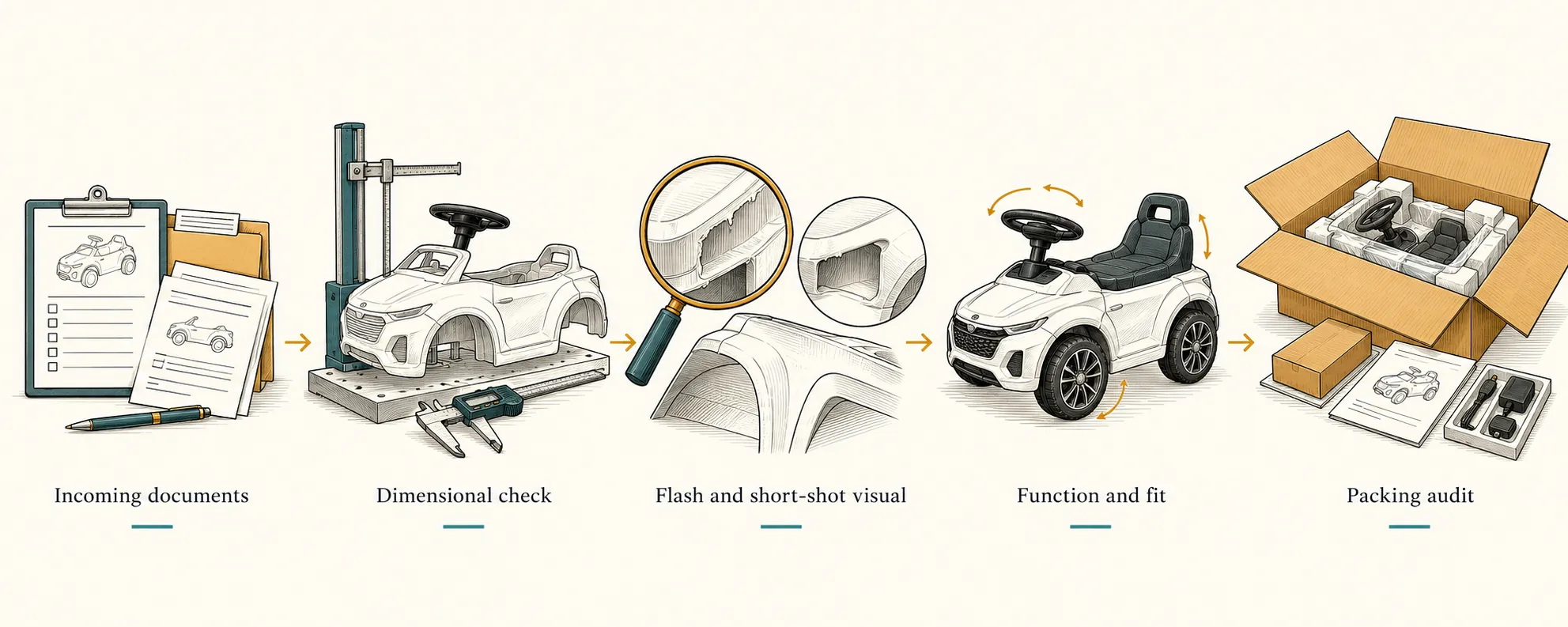
Define the unchanged base SKU as one model platform with a named representative catalog item, fixed riding structure, approved configuration revision and traceable carton reference. For an electric ride-on toys wholesale range, customization should create documented variants of that baseline—not silently replace it. Choose the platform for its riding mechanism and assortment role, then approve the exact configuration. Battery, motor, remote control, color and packaging may vary only within explicitly reviewed limits.
The base is a stable reference, not a statement that every customized unit is identical. Keep the supplier’s representative item identifier separate from your own sellable variant identifiers, and preserve the relationship between them.
Diagram: How to Define the Unchanged Base SKU in electric ride-on retail ranges CustomizaWhich parts of a customized ride-on range must stay fixed?
Keep the platform identity, representative catalog reference and riding structure fixed; freeze the approved technical configuration and carton specification at a named revision.
Start with how the rider sits, steers and drives. Record the chassis and wheel arrangement, seating layout, steering mechanism, drive layout and child-operated or remote-control architecture. Similar body styling is not enough to establish the same platform.
Place the candidate in the procurement group that matches its assortment role: Electric Cars & SUVs, Electric Motorcycles & ATVs, Drift Cars & Go-Karts, Construction & Utility Rides, or Theme & Specialty Rides. A procurement group organizes the range; it does not prove that its products share a platform.
The approved baseline remains unchanged when a variant is added. Record each permitted difference separately. If a proposed change alters the fixed riding structure or replaces the underlying platform, reopen the base decision rather than treating it as another color option.
Which representative catalog item should anchor the range?
Choose the electric ride-on car as the candidate for a conventional car assortment, and keep the drift car as a separate candidate until platform and riding-structure equivalence is established.
The following catalog comparison supports candidate selection, not final configuration approval. Shared packing does not establish a shared chassis, drive system or control mechanism.
| Electric ride-on car candidate | Representative catalog identifier: ROT-353519. Recorded product name: Electric Ride-On Car. Procurement placement for this example: Electric Cars & SUVs. Catalog snapshot: October 9, 2026. Packing: carton; 1 unit per carton. |
|---|---|
| Electric drift ride-on car candidate | Representative catalog identifier: ROT-353509. Recorded product name: Electric Drift Ride-On Car. Procurement placement for this example: Drift Cars & Go-Karts. Catalog snapshot: October 9, 2026. Packing: carton; 1 unit per carton. |
| Worked selection decision | For a conventional electric car range, select the electric ride-on car as the representative candidate. Do not place the drift car beneath that base as a cosmetic variant merely because both are ride-on cars packed individually. |
What should the base-SKU definition worksheet contain?
The worksheet should connect one selected catalog item to a defined physical platform, an exact configuration and a carton reference, while distinguishing the intended specification from what has actually been observed.
This worked example completes the candidate-selection decision without pretending that a sample has been inspected or a production configuration approved. “Base R0” below is a proposed worksheet revision label, not a supplier model number or an existing approval.
| Range and intended use | Example target: a conventional electric car assortment within Electric Cars & SUVs. Selection decision: use the electric ride-on car candidate; assess drift products separately. |
|---|---|
| Representative catalog identity | Selected identifier: ROT-353519. Recorded identity: Electric Ride-On Car, catalog snapshot October 9, 2026. Preserve this identifier in the base record even when retail variants receive separate identifiers. |
| Worksheet revision | Proposed label: Base R0. Scope: candidate definition for sample and quotation requests. Keep the first approved configuration as a separately signed revision rather than overwriting this selection record. |
| Model platform — fixed field | Target: one identifiable chassis/body platform. Approval condition: obtain the supplier platform reference and match it to the proposed sample and construction drawings. Do not use the generic product name as the platform identifier. |
| Riding structure — fixed field | Target: one documented seating layout, wheel/chassis arrangement, steering mechanism and drive/control architecture. At sample review, record the specified arrangement alongside the observed arrangement and resolve each difference before locking the base. |
| Configuration — revision-controlled field | Record the exact battery, motor quantity and type, controller, charger and remote-control arrangement selected for the baseline. Link the configuration list to the sample identifier and technical references. Approve alternatives individually; do not authorize unspecified substitutions. |
| Carton reference — fixed baseline | Catalog observation: carton packing, 1 unit per carton. Approval target: a named carton specification covering the packing layout, protective components, dimensions and artwork revision. Keep packaging variants linked to their own approved carton references. |
| Permitted customization scope | Candidate attributes: battery, motor, remote control, color and packaging. Permission is limited to the alternatives explicitly accepted against the approved base revision; listing an attribute here does not approve every possible change. |
| Current worked decision | Select the representative candidate for sample and quotation requests. Withhold the base lock and variant release until platform, riding structure, configuration and carton conditions are closed. |
When can battery, motor, remote control, color or packaging remain a variant?
Keep a customization under the same base only when it preserves the fixed platform and riding structure and its exact differences have been reviewed against the approved revision.
For a proposed color-only variant, identify the finish specification and artwork, and state that no component or construction substitution is authorized. For a packaging-only variant, retain the product configuration but assign a separate packing specification where the carton or protective layout changes. Neither request should silently rewrite the baseline.
Electrical changes need a tighter boundary. A different battery can affect mounting, charging and the electrical system; a motor change can affect drivetrain compatibility and operating behavior. Adding or replacing remote control can change the controller and control functions. Review those interfaces and the relevant technical and destination-market documentation before accepting the alternative.
Use one variant line containing the parent base identifier and revision, variant identifier, requested change, all unchanged fields, supporting quotation or technical reference, and acceptance decision. A short entry such as “larger battery” is not an adequate configuration definition.
Retain the base when a reviewed alternative fits its fixed platform and structure. Revise the baseline if the approved reference configuration itself changes. Establish a separate base when the platform or riding structure changes. A shared parent reference does not automatically extend the scope of a test report to every variant.
Who approves the base, and how are open conditions closed?
Assign the assortment buyer responsibility for the range decision and a technical reviewer responsibility for the configuration assessment, with named sign-off against the same revision.
The approval record below continues the worked example. It recommends a hold on the base lock, not a completed approval by an invented person. Use actual names and actual approval dates when the reviews occur.
Close a condition only after the responsible reviewer checks the evidence, records the result and attaches the closing reference to the relevant revision. If the evidence changes the target configuration, revise the baseline before signing. The record supports traceability; it does not by itself detect an undisclosed substitution.
| Base identity and revision | Representative catalog identifier: ROT-353519. Proposed worksheet revision: Base R0. Decision scope: conventional electric car range candidate. |
|---|---|
| Decision and release boundary | Recommended decision: candidate selected; base lock withheld. Proceed with a sample and quotation request against the worksheet targets. Do not describe production variants as approved against this candidate-only revision. |
| Responsible approvers and dates | Assortment buyer: record the responsible person's name, range decision and actual sign-off date. Technical reviewer: record the responsible person's name, configuration decision and actual review date. Both entries must identify the revision reviewed. |
| Platform and sample condition | Owner: technical reviewer. Request the platform reference, drawings and identified sample. Closure: record target versus observed riding structure, resolve deviations, and attach the reviewed drawing revision and sample inspection reference. |
| Configuration and carton condition | Owner: technical reviewer, with packaging review as needed. Closure: attach the accepted component/configuration list and carton specification; record whether the sample matches each target and how deviations were resolved. |
| Quotation condition | Owner: assortment buyer. Obtain a current quotation tied to the exact configuration and permitted variants, including price, MOQ and delivery terms. Closure: identify the accepted quotation revision; catalog references alone do not set customized-order terms. |
| Age and destination-document condition | Owner: designated product-safety or compliance reviewer. Request age-supporting information and destination-specific documents for the selected construction and configuration. Closure: record the review decision and document references without treating the catalog identity as proof of certification, licensing or suitability. |
| Follow-up closure and final approval | For each condition, record the owner, agreed due date, closing reference, reviewer and closure date. Once conditions are resolved, issue the signed baseline revision and link every accepted variant to it. Keep superseded revisions available for traceability. |
Continue the buying conversation
Compare the ride-on range, packing references and product files before requesting a quotation.